
JOURNAL
The Things You Only Learn on a Tanzania Safari

Post:
The Things You Only Learn on a Tanzania Safari
Category:
SafariAUTHOR:
Nimali Africa
DATE:
September 2026
A little insider knowledge changes the way safari makes sense.
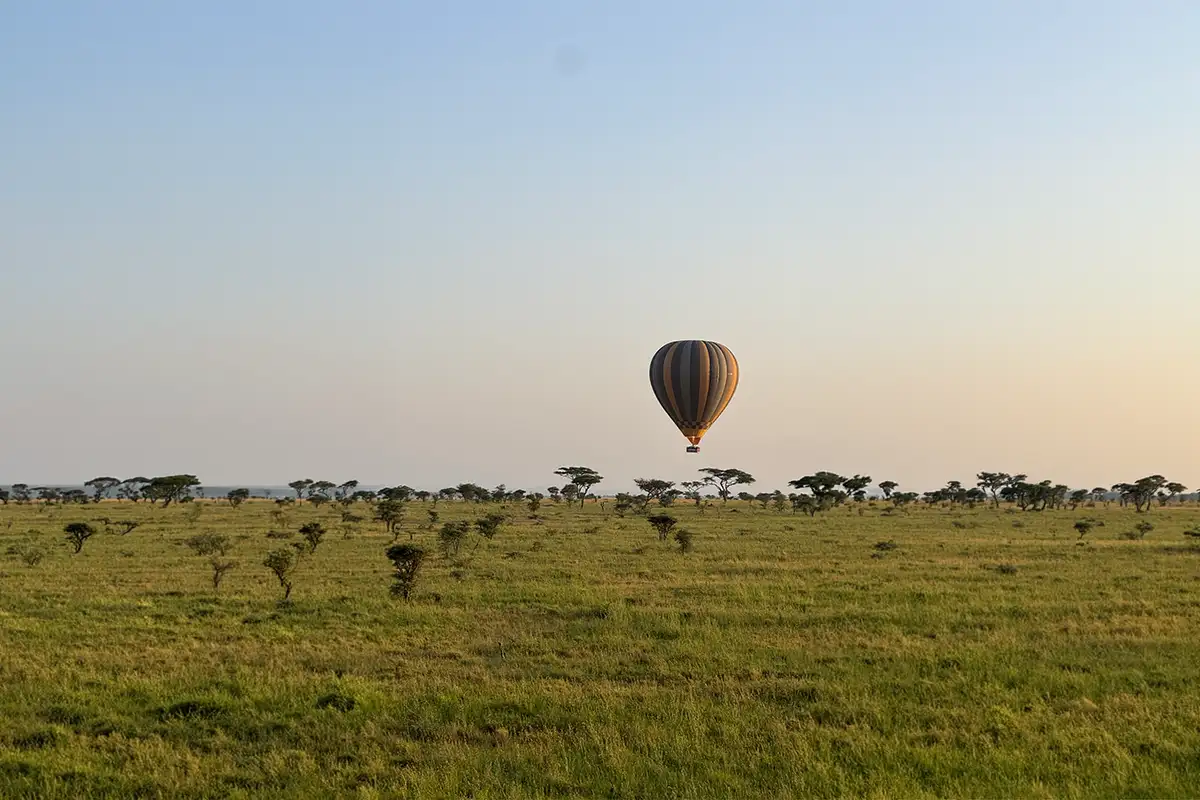
Before your first safari, it is easy to think mostly about what you might see. Lions, elephants, leopard, perhaps the Great Migration if the timing is right. What is harder to imagine is how much the experience is influenced by everything around the sighting: the vehicle you are in, the guide beside you, the freedom to stay longer, the option to step out on foot or the completely different perspective that comes from looking down from a balloon.
These details can sound secondary when a safari is still an itinerary on paper. Once you are there, they begin to matter.
Seasoned safari travellers understand that a good day is not simply about finding more wildlife. It is also about how you experience what is already around you.
An open safari vehicle is one of those things that makes much more sense once you have spent time in one.
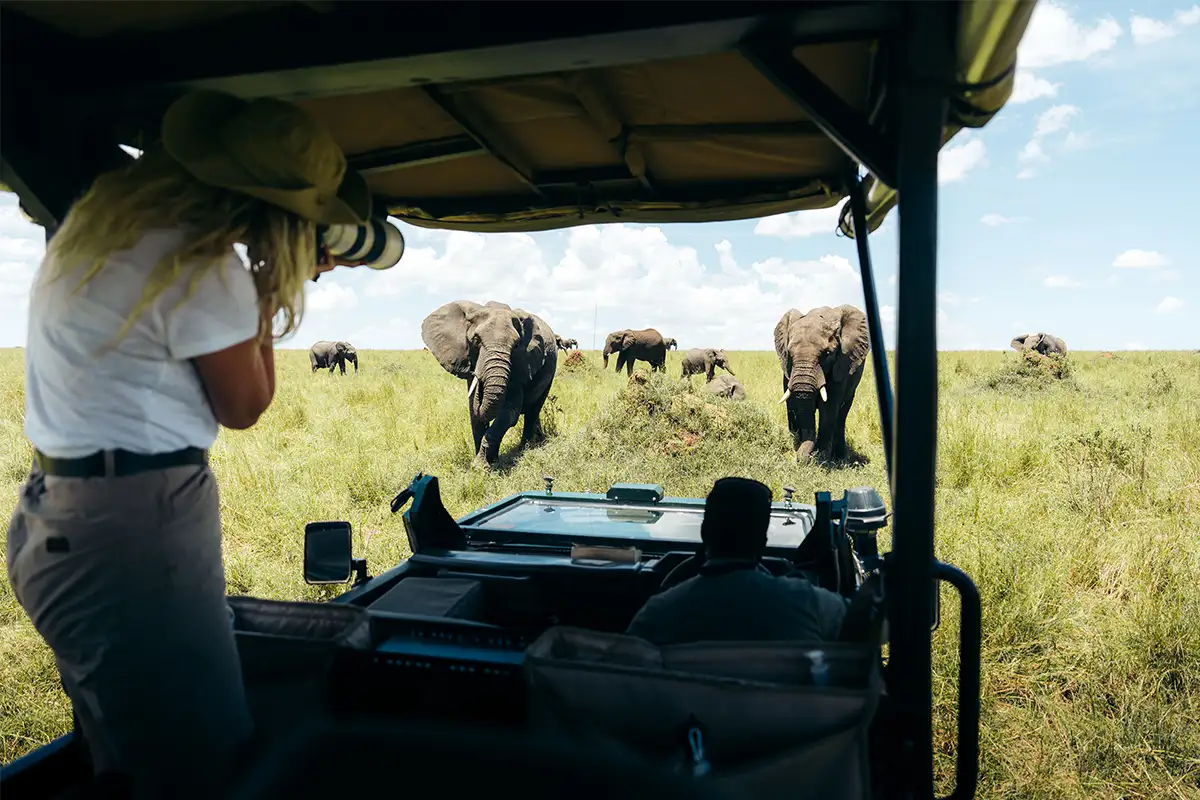
There is no window separating you from what is happening outside and no fixed frame through which to watch the landscape. A giraffe can appear behind you, a bird call can draw your attention in another direction and an elephant crossing the road can become something the whole vehicle experiences together rather than through individual windows.
Nimali’s open safari vehicles are designed to keep that connection while still making long hours in the field comfortable. The difference is not simply better visibility. It is the feeling of being part of the environment you are travelling through.
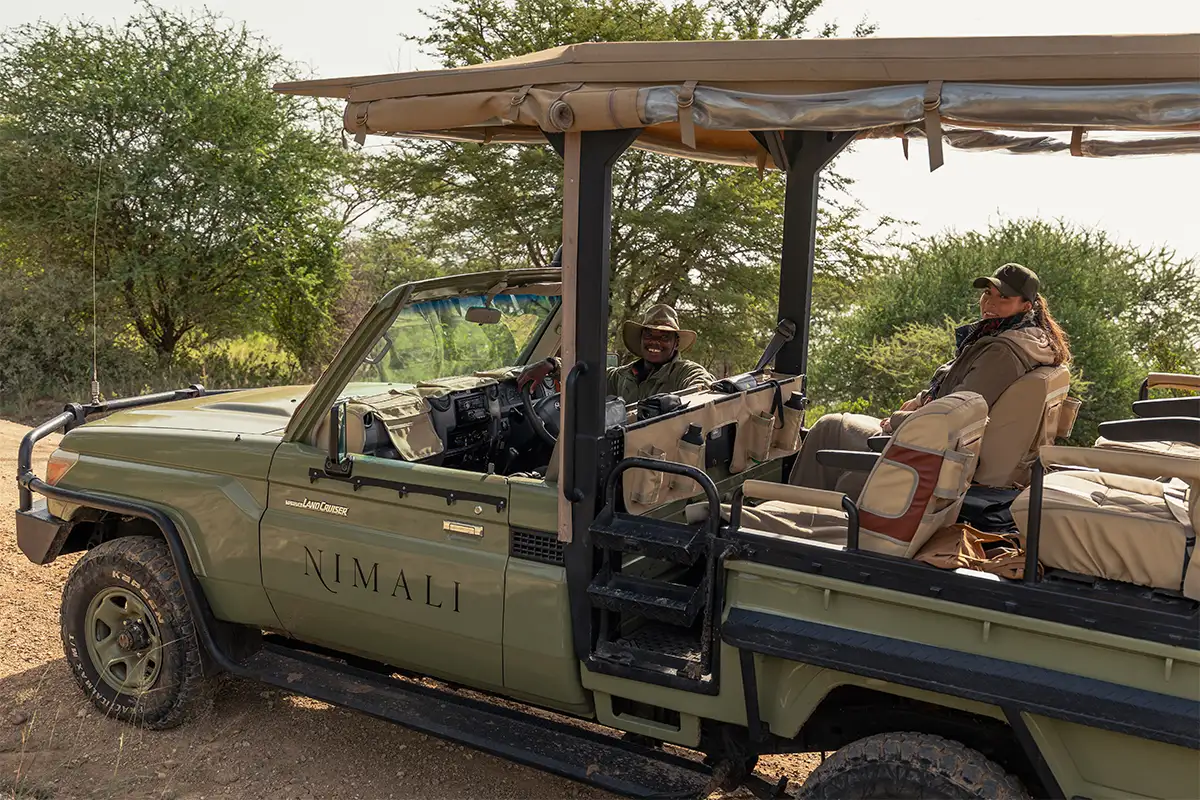
A private vehicle changes the day in another way. It allows the experience to respond to the people in it. A photographer may want twenty more minutes with a subject. A family may decide it is time to return to camp. Another group may become fascinated by animal behaviour that would barely register on a checklist of sightings.
That freedom is one of the quieter advantages of safari. Sometimes the best decision is not to move on simply because there might be something else around the next corner.
A game drive naturally draws the eye outward. You are looking across the landscape, scanning for movement and following the direction of the guide’s gaze.
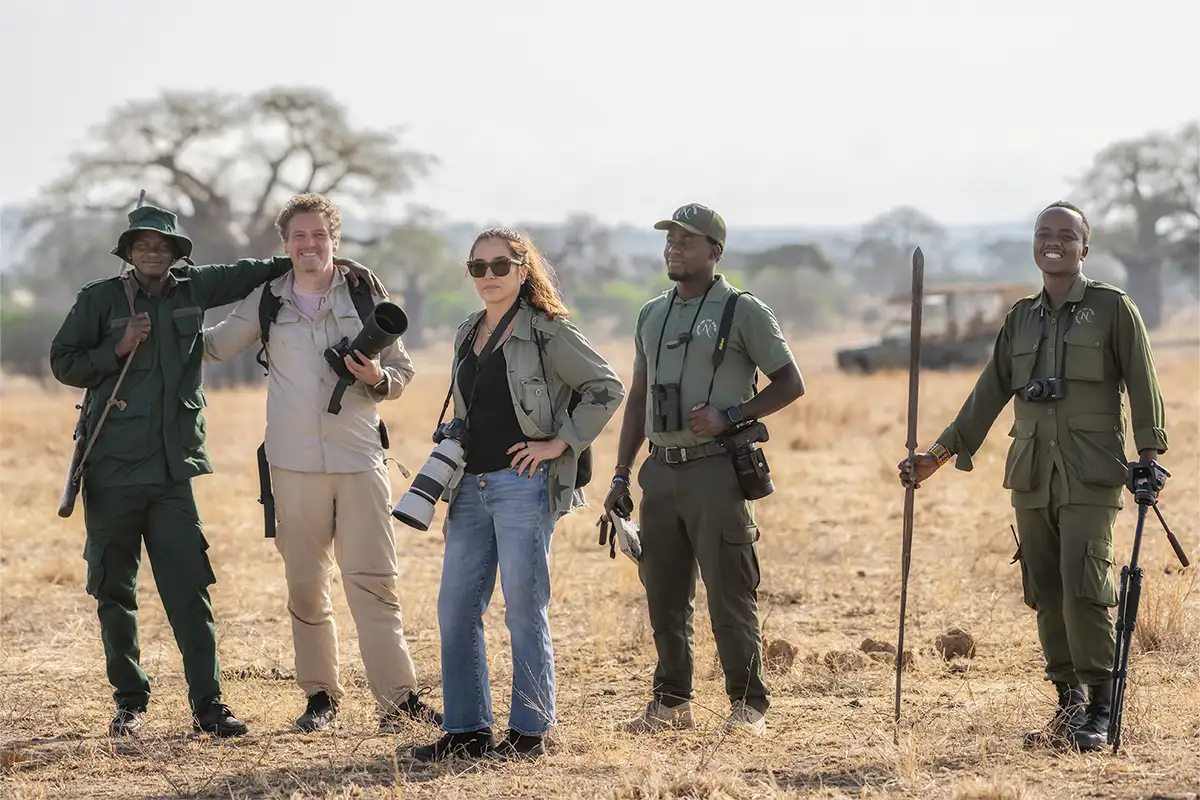
Walking changes the scale.
At Nimali Tarangire, guided walks bring attention closer to the ground. Tracks begin to tell a story. Plants, insects and signs of animals that have already passed through become part of the experience. You begin to understand how much information exists in a landscape even when there is no large animal standing in front of you.
It is not a replacement for a game drive and it should not feel like one. Its value is precisely that it asks you to experience the same environment differently.
The underground hide at Nimali Tarangire does something similar without requiring you to travel anywhere at all. Positioned at the waterhole, it brings guests to eye level as elephants arrive to drink. From there, the encounter is less about the broad spectacle of seeing an elephant and more about what becomes visible at close range: the movement around the water, the interaction between adults and calves and the sheer scale of an animal when you are no longer looking down from a vehicle.
The wildlife has not changed. Your position has.
Hot air ballooning changes the safari again.
Across the Serengeti, the landscape opens beneath you in a way that is impossible to understand fully from the ground. Kopjes, grasslands, river lines and wildlife begin to relate to one another differently when there is enough height to see how they fit together.
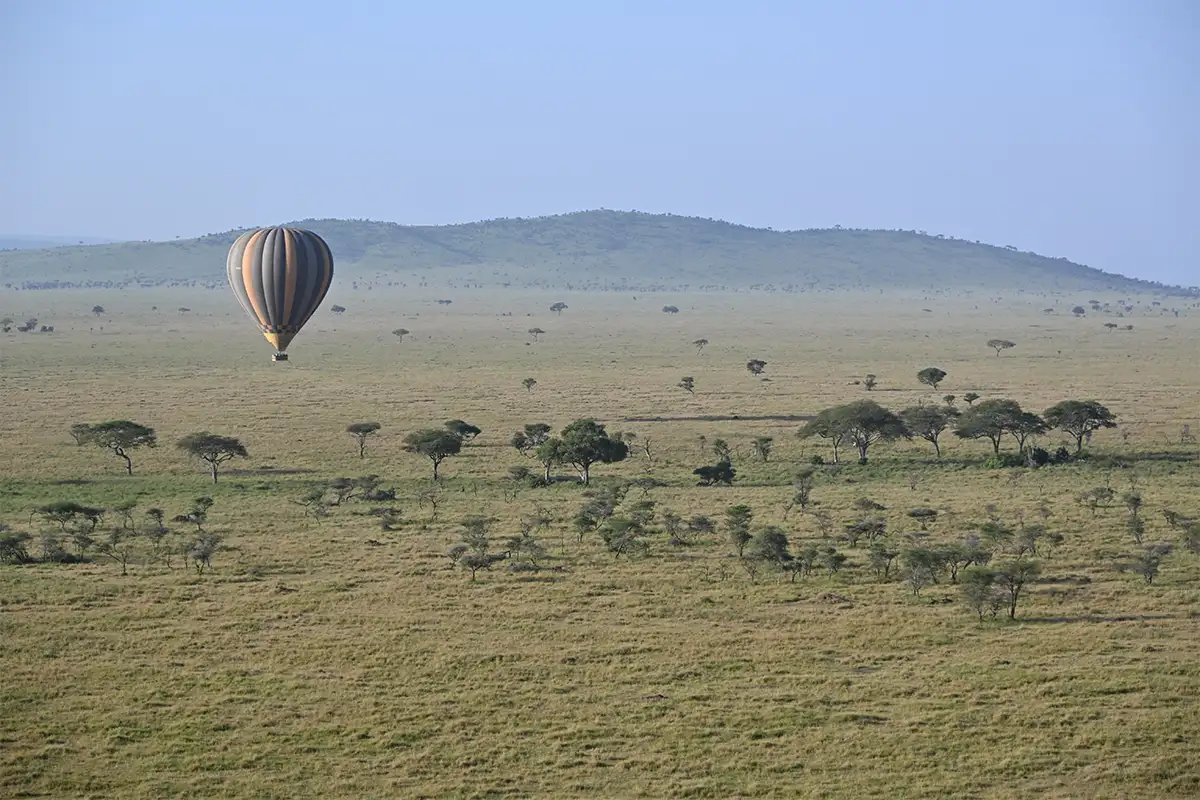
Ballooning is available from both Nimali Serengeti and Nimali Mara, adding another perspective to time spent in the Central and Northern Serengeti.
Flying between safari areas can offer a similar surprise. Light aircraft are usually discussed as transport, but for many guests the flight becomes part of the experience itself. Looking down across long stretches of Tanzania makes the scale of the country more tangible and the change between one region and another becomes visible before you have even landed.
This is not about flight schedules or luggage allowances. Those are practical matters. The more interesting part is what the view from above adds to your understanding of where you are.
One of the advantages of travelling between Nimali properties is not that the same safari can be repeated in different locations.
It is that each setting allows something different.
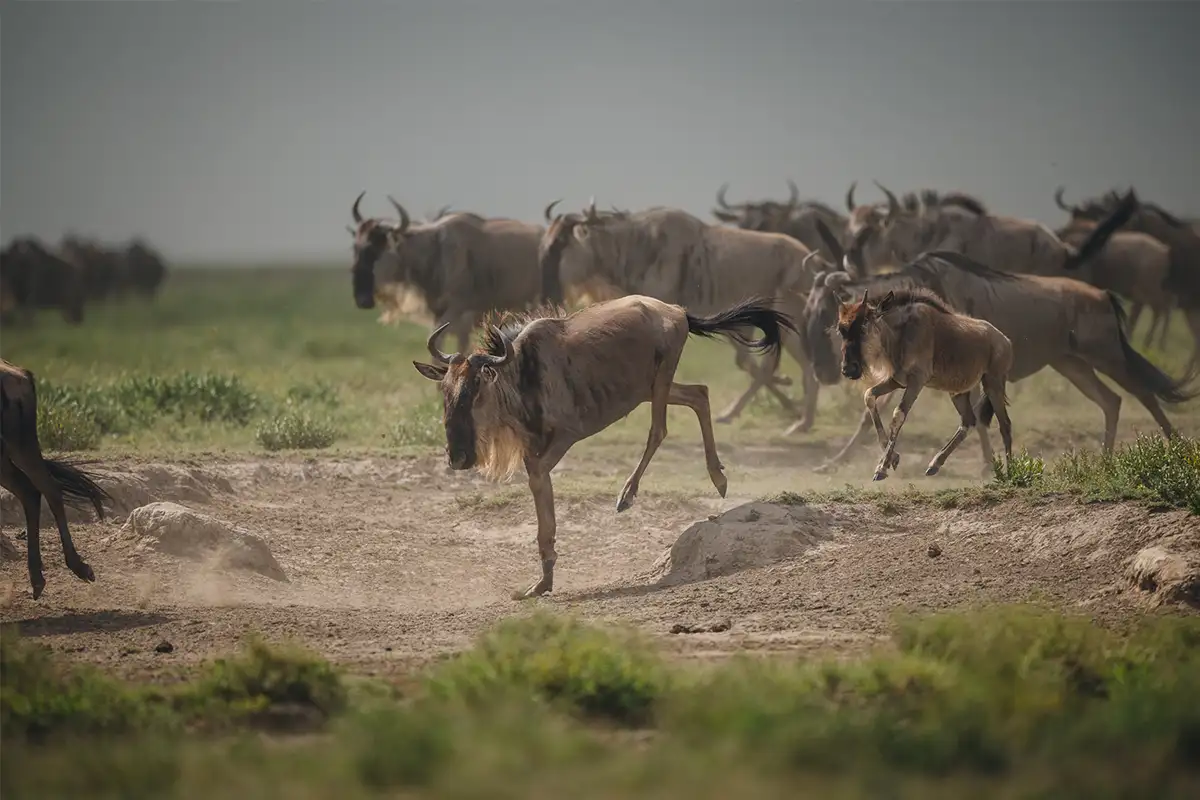
Nimali Tarangire offers experiences such as walking safaris and the underground hide alongside traditional game drives. Nimali Serengeti, near Makoma Hill in the Central Serengeti, places guests within a vast, game rich landscape where days can extend across open plains and ballooning adds yet another perspective. Nimali Mara, in the far north, has its own character, with the Mara River nearby, huge boulders around the lodge and the remoteness that comes with this part of the Serengeti.
The differences matter because safari should respond to where you are rather than follow exactly the same formula everywhere.
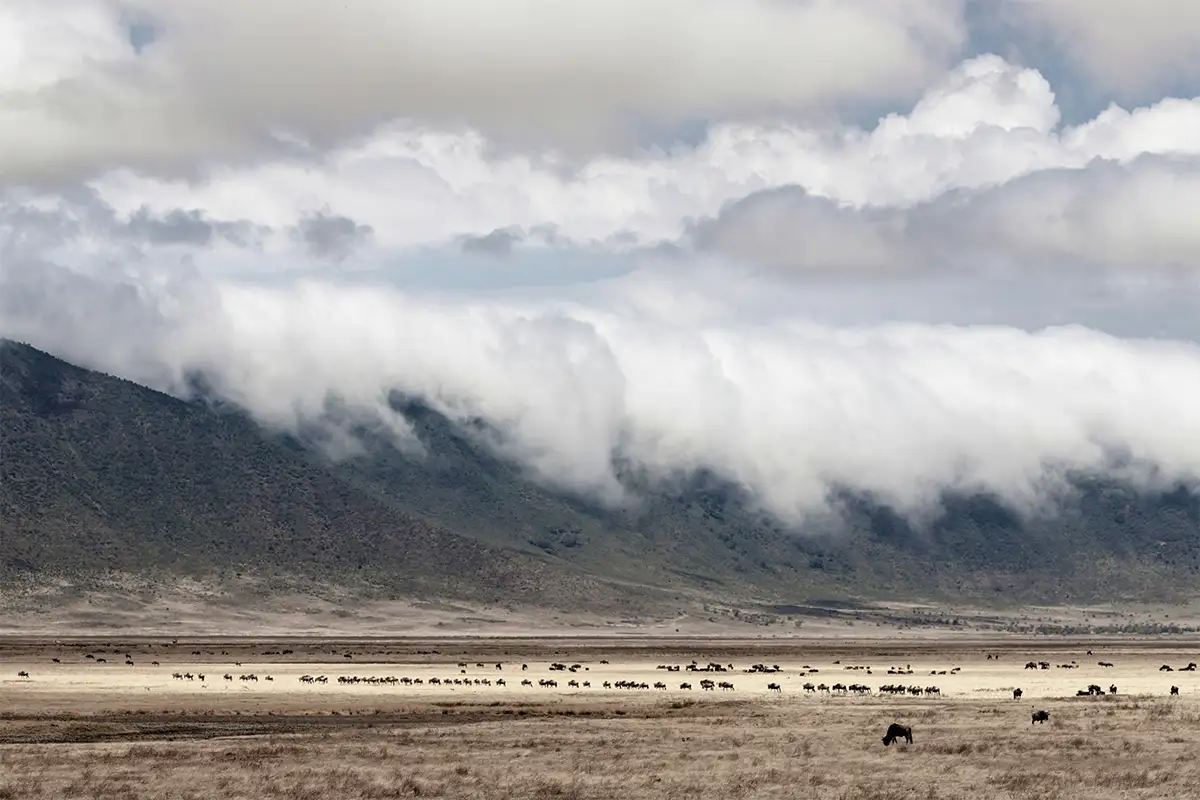
The same is true when a wider Tanzania journey includes somewhere such as Ngorongoro. Nimali may not have a lodge at the crater, but it remains one of Tanzania’s defining safari experiences and can form part of a journey planned around the guest. A stay there adds a completely different environment and wildlife experience rather than simply another name on an itinerary.
Understanding those distinctions helps a safari feel considered rather than crowded.
There are many details a first time traveller can research before safari, but some only become meaningful through experience.
You understand why an open vehicle matters after hours spent in one. You understand the value of a private vehicle when everyone decides to stay with one encounter a little longer. You understand why walking is not simply another activity once the scale of the landscape changes around you. And you understand why seeing Tanzania from above can alter your sense of the journey entirely.
None of this means that a safari needs to include everything.
The opposite is often true. Knowing how safari works helps you recognise which experiences add something worthwhile and which are simply more.
The best journeys are not built by adding more, but by understanding what each experience can bring to the safari.


