JOURNAL
The Heart of Nimali

Words and photography by Harman Singh Heer, Freelance photographer and safari planner.
The midday sun hangs over the northern Serengeti. After a long and bumpy journey, we are on the final stretch of dirt road, making our way towards Nimali Mara, our home for the next two nights. As our guide, Edson, steers the vehicle towards a cluster of kopjes, the camp begins to emerge against a backdrop of endless green hills. The hum of the vehicle gives way to the rhythm of human voices, singing a welcome song in Swahili – “Jambo, jambo bwana, habari gani, mzuri sana.” The staff of the camp have all come out to welcome us, as if we are immediately part of their family.
They all wave, smiles wide.
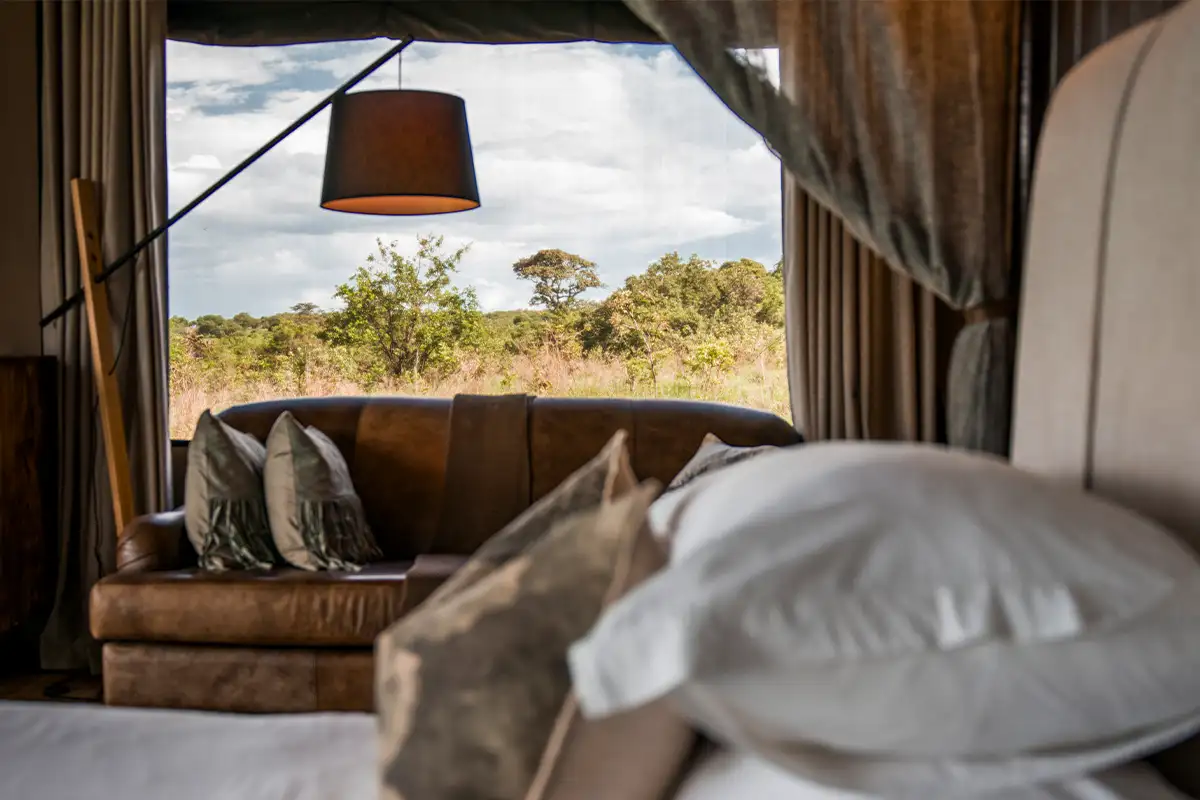
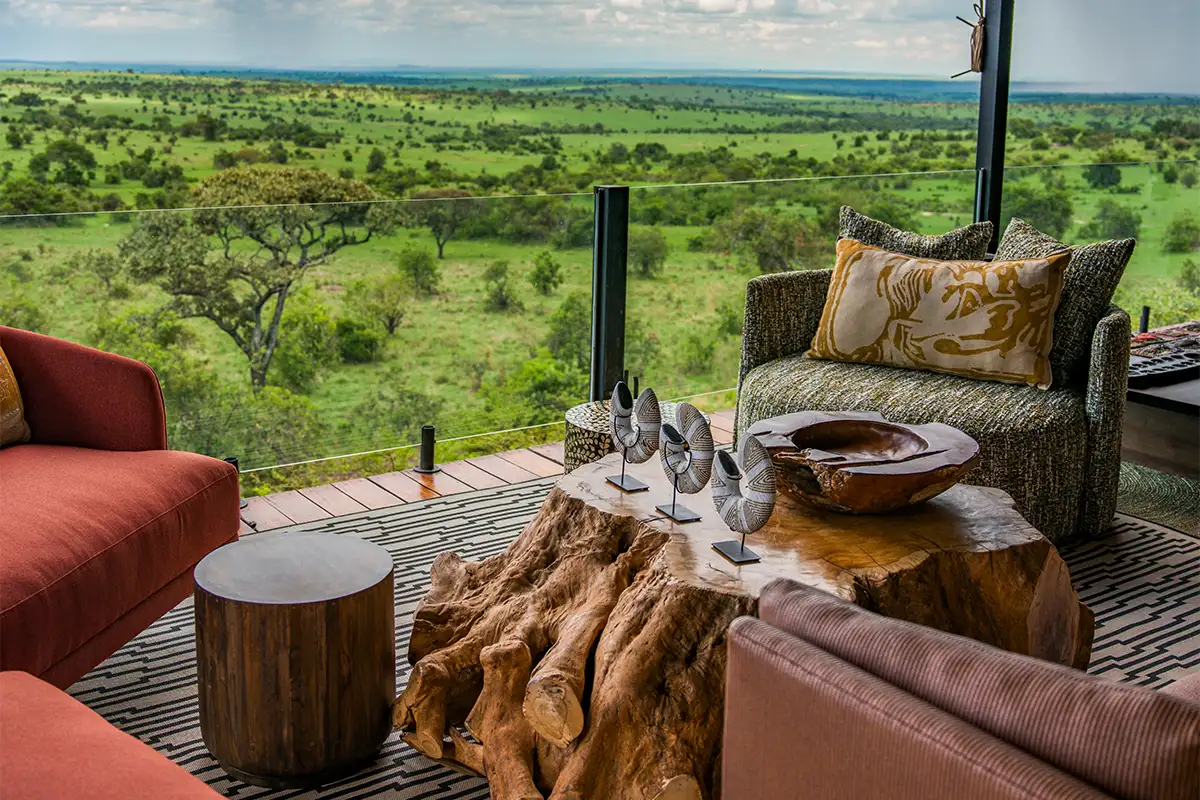
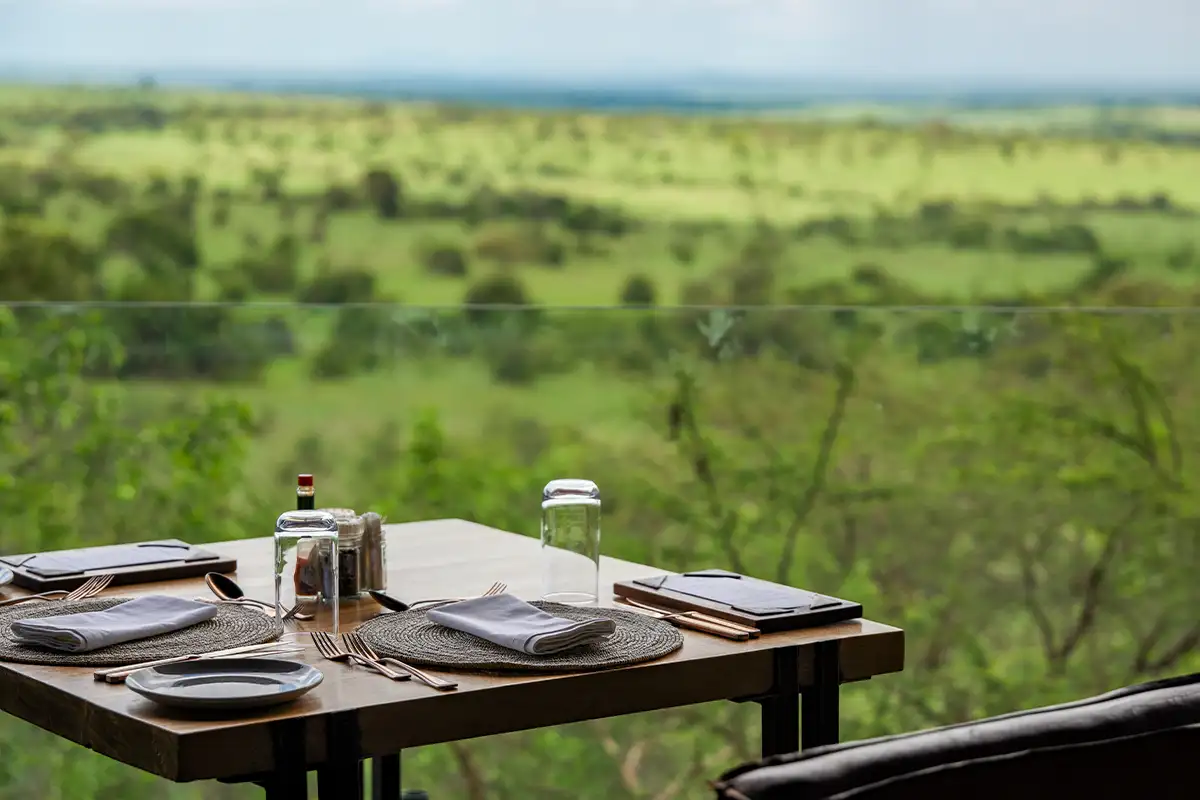
Sunday opens the door of the vehicle, and says “Karibu sana” which is Swahili for you’re most welcome. He takes us up to the main area, where a recent, subtle refresh has introduced beautiful new furniture while retaining the lodge’s familiar character. “The view is breathtaking,” I say. Open blue skies with cotton candy clouds meet waves of green savannah and scattered shrub. Sunday smiles and agrees that the view is beautiful, but that he has another spot to show me later, one that he considers his favourite in the entire Serengeti. He then proceeds to brief us about the camp, before letting us settle in.
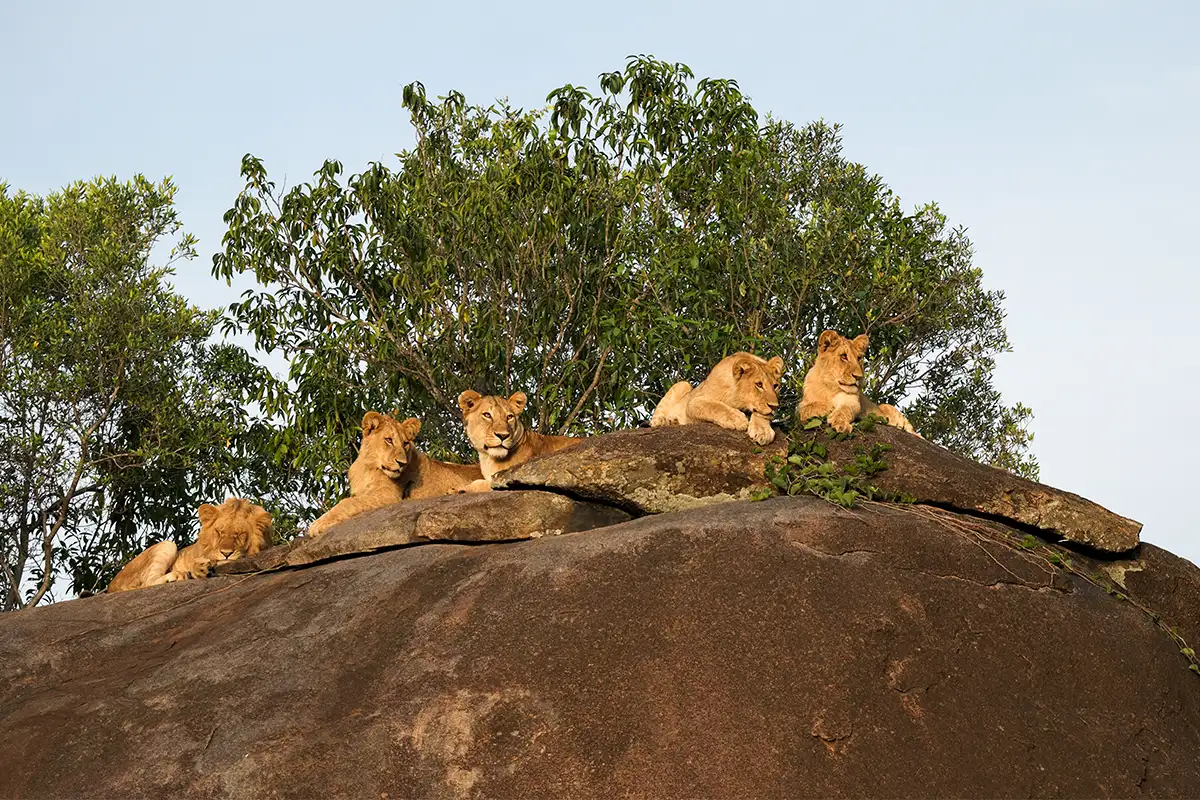
It is now 4.00pm, and time for our afternoon game drive. Edson is already waiting for us by the vehicle. “Is there anything specific you both would like to see over the next couple of days?” he asks. Mum has no requests, but I respond, “I’d love to see lions on the kopjes.” Edson replies, “I’ll do my best to make it happen.” We search the areas where Edson commonly finds lions on the rocks, but a massive thunderstorm forces us to retreat to camp before sundown.
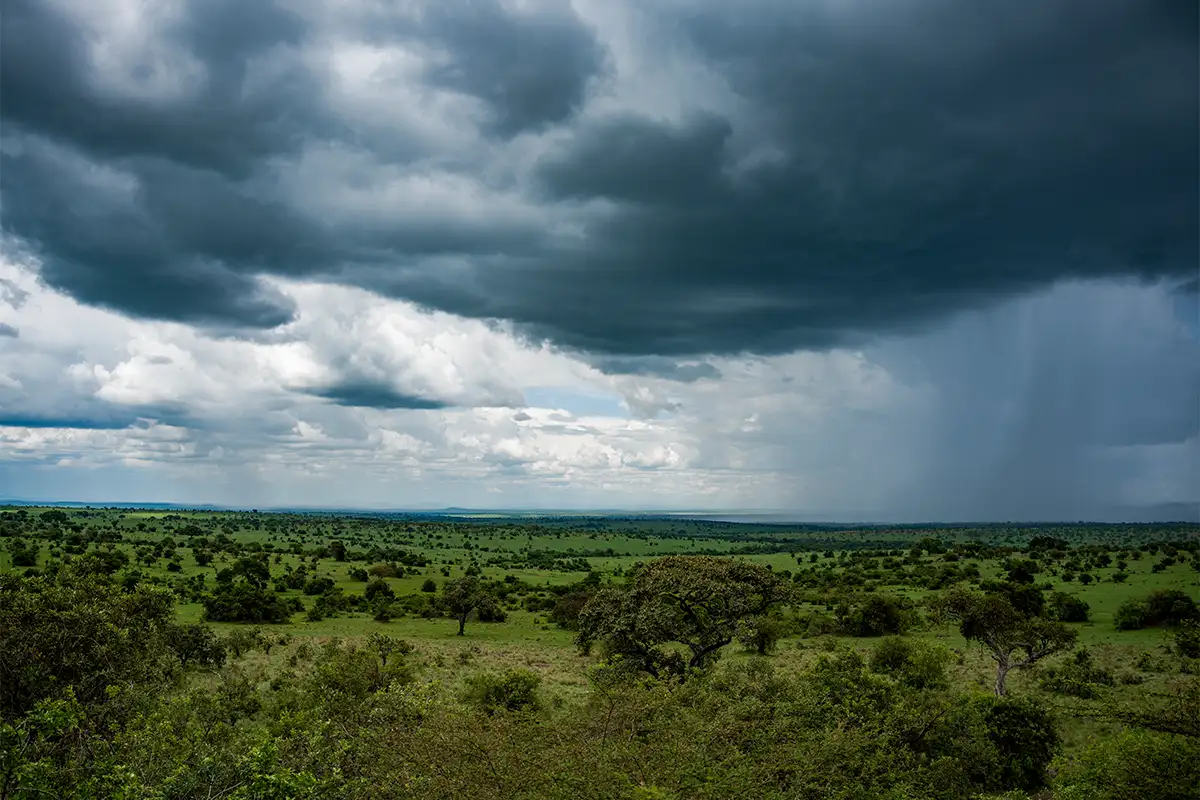
Back at camp, Sunday and our waiter, Seleman, are waiting to greet us. Seleman takes us to the dining room for dinner. I notice he is wearing a bracelet with the Kenyan flag on his wrist, similar to the one I’m wearing. “Are you from Kenya?” I ask. He explains that it had been given to him by a good friend from Kenya, and that in return, he had gifted that friend a bracelet with the Tanzanian flag. It was a special gesture between two friends from neighbouring countries, each carrying a small reminder of the other. We enjoy our dinner and more conversation with him, before retiring for the night.
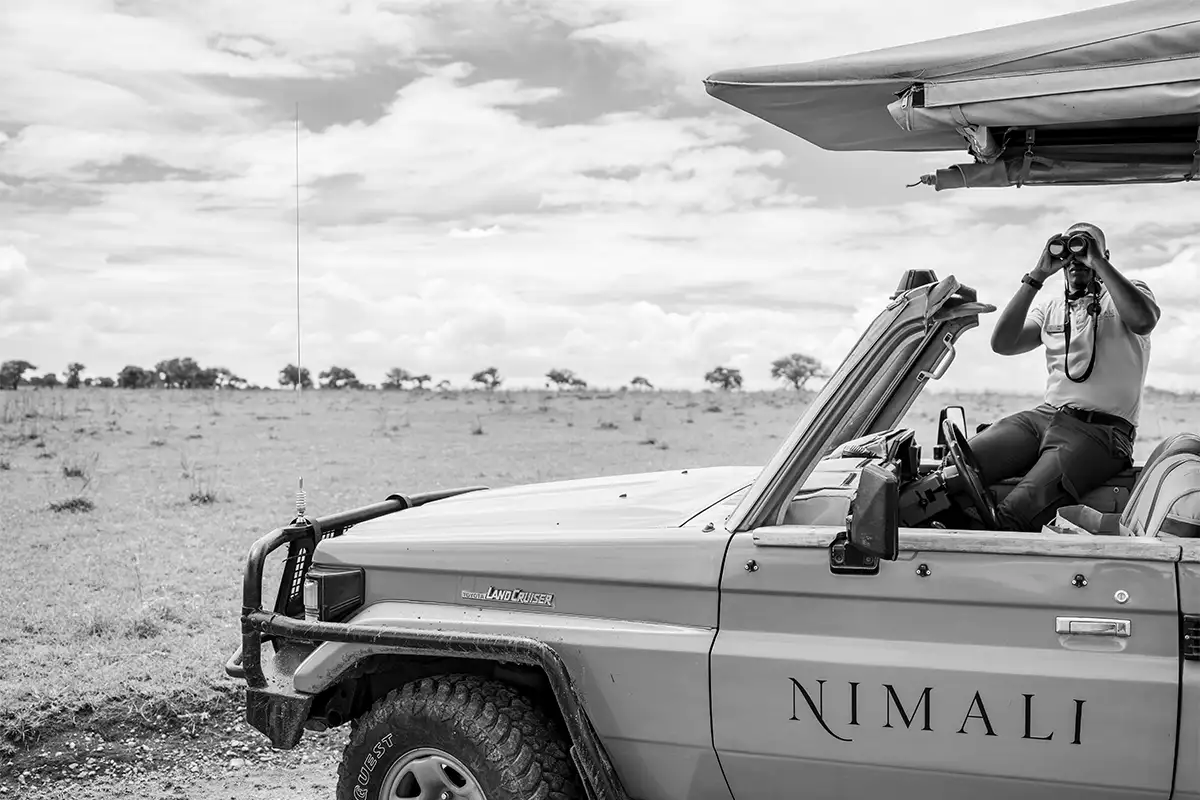
First light filters through the low hanging cloud as the sky begins to awaken. Walking to the vehicle for the morning game drive, I let Edson know that we heard lions roaring not far from camp during the night. He suggests we spend the early hours searching for them. For a while, there is little to show for our efforts, but just as we begin making our way towards another area, Edson spots three lionesses resting on a distant kopje, their silhouettes framed against the golden light.
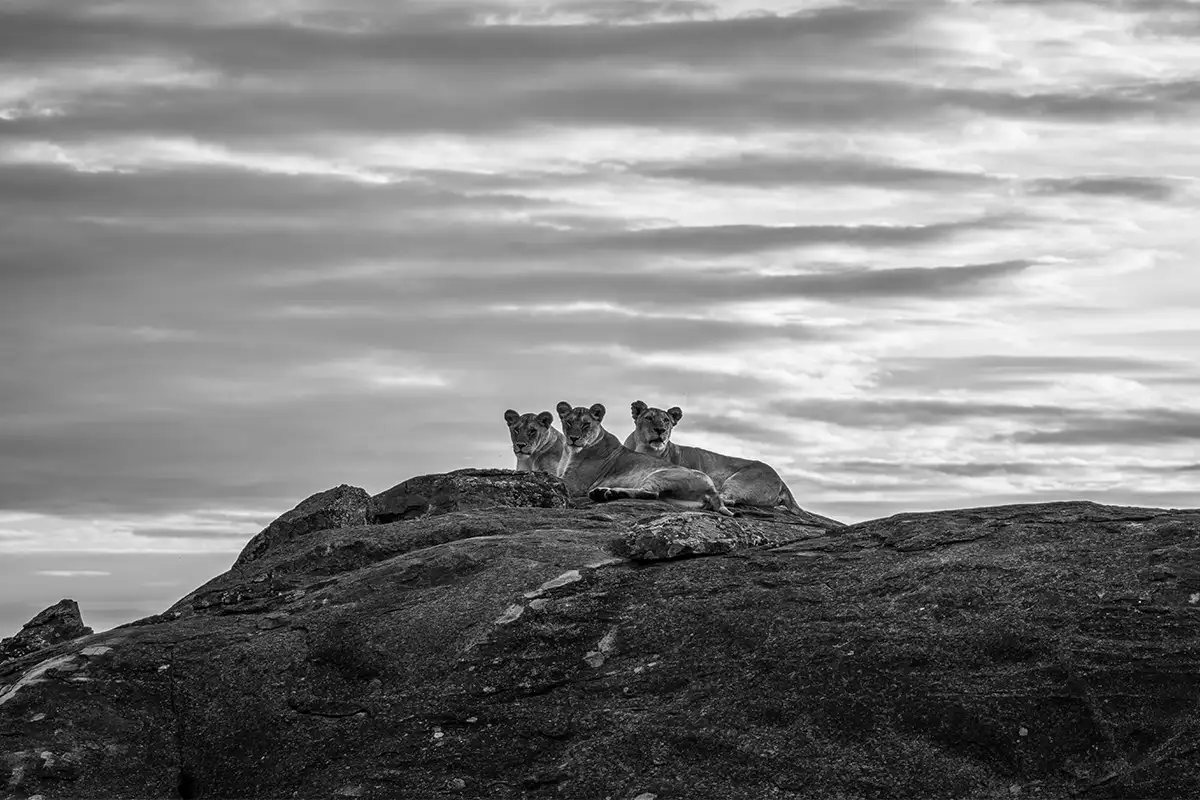
Knowing that I’m here for photography, he turns to ask how I would like him to position the vehicle. He is keen to understand what I need from a photographic perspective, and together we explore different positions and angles to make the most of the sighting. We spend the remainder of the morning with the lions, trying out different perspectives, before continuing our search through the endless plains for the rest of the day.
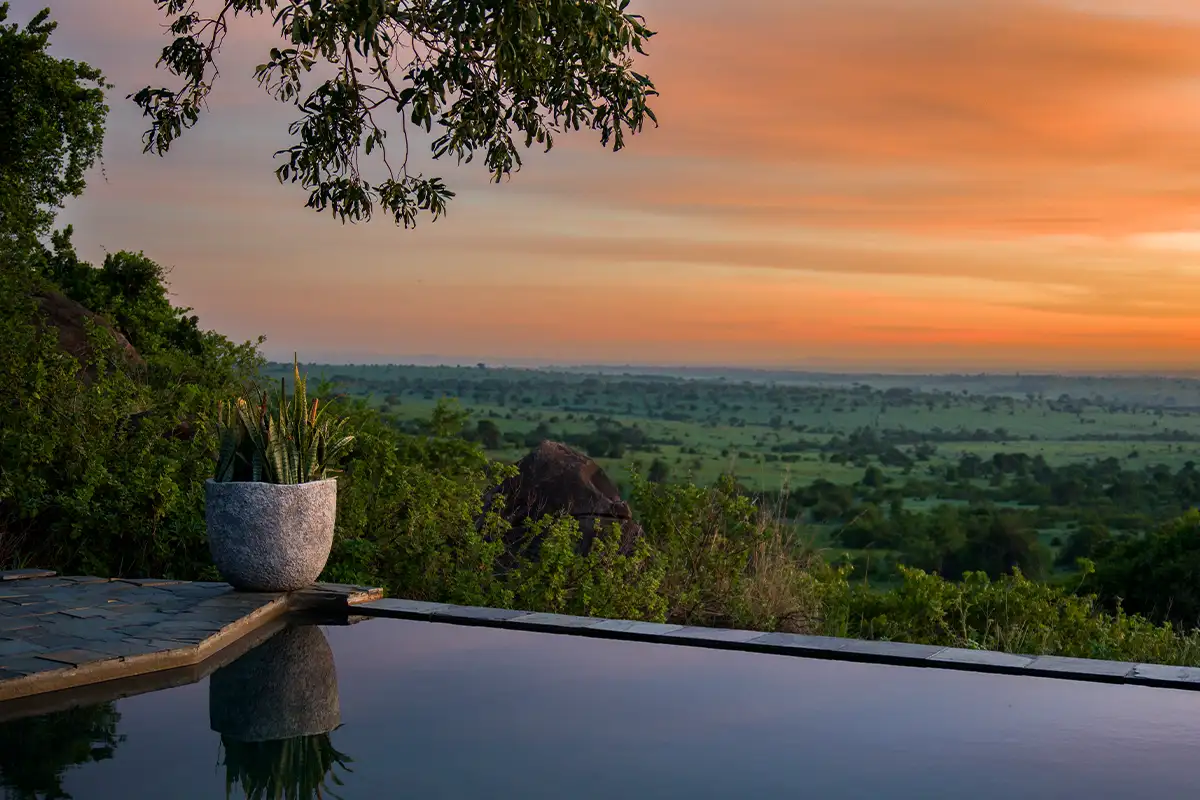
It is our final morning in the Serengeti. Sunday meets us at the main area, ready to say farewell. “Before you leave, I’d like to show you the view I was telling you about,” he says. He takes us up to the swimming pool, which overlooks the northern Serengeti and some distant hills in Kenya. The sunrise clouds melt into the reflection of the pool, and the breeze carries birdsong. “This is a very special spot indeed,” I tell Sunday. “I come here most mornings to start my day, and it is a blessing,” he responds. We take in the view, before saying goodbye.
Now on the morning drive, as we slowly make our way to the airstrip, I show Edson some of the photographs I have captured with him. His eyes light up, almost in disbelief that he had played a part in bringing these photographs to life. It feels so rewarding to share that feeling with him, after he has worked so hard to get me in the right places at the right times.
Edson drops us off at the airstrip, and we thank him for a phenomenal safari. He shakes my hand and says, “Asante sana,” which is Swahili for thank you very much. He mentions that he has learnt a lot from me about guiding a photographer and hopes that I will return someday.
Nimali Mara has a way of drawing you in, with its stunning landscapes and its remarkable abundance of wildlife. But its beating heart is found in the people who call it home, and in the way they make you feel at home, too.